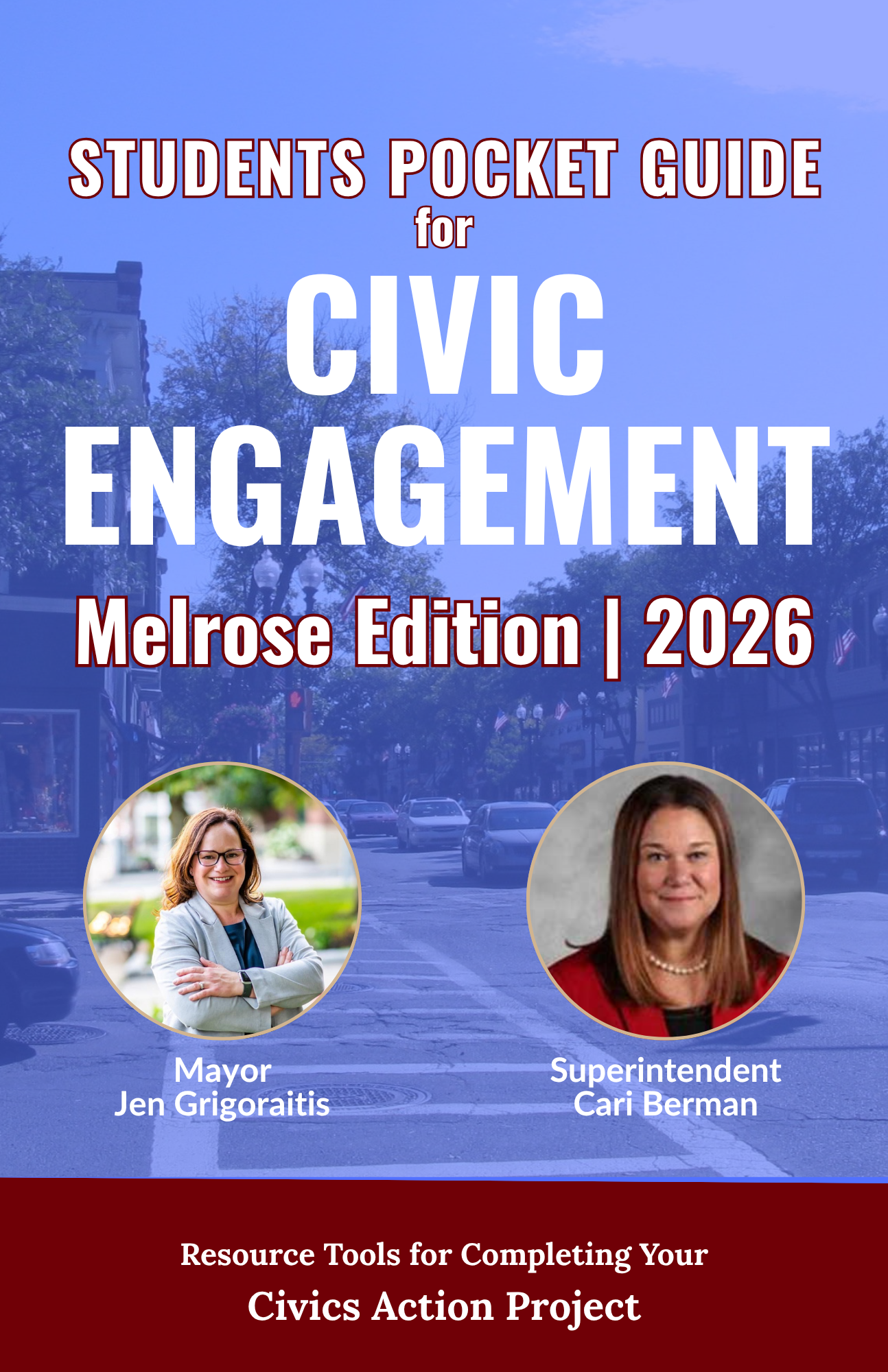
Melrose, Massachusetts
A Short History of Melrose
A piece of Charlestown, then a piece of Malden, then a railroad stop, then a city. Melrose is what happens when a train line runs through farmland.
Before There Was a Melrose
European settlers first reached the land that is now Melrose in 1628, when it belonged to Charlestown. Later it was absorbed into Malden and known simply as North Malden, a farming district on the far side of the hills. For more than two centuries it was somebody else’s outskirts, which is why so little of the early record is about Melrose at all.
The Railroad Makes a Town
Then the trains came. By 1845 the Boston and Maine Railroad ran three stops through the area, at what are now the Wyoming Hill, Cedar Park, and Melrose Highlands stations. Suddenly a farmer’s field was twenty minutes from Boston. People who worked in the city could live in the country, and they did, in numbers. Melrose became one of the original streetcar suburbs in America, a place invented by a commute. In 1850 North Malden broke away and incorporated as the Town of Melrose.
Becoming a City
Fifty years later the town had outgrown the town meeting. In 1900 Melrose incorporated as a city, and Levi S. Gould took office as its first mayor on January 1 of that year. The charter it adopted gave real power to an elected mayor, and that basic structure, a strong mayor and an elected council, still governs the city today. It would take another hundred and twenty four years before Melrose elected a woman to the office.
The Land the City Kept
Melrose is small, about 4.7 square miles, and yet roughly 26 percent of it is protected green belt. That includes the city’s share of the 2,200-acre Middlesex Fells Reservation on its western edge, along with Mount Hood, Ell Pond, Swains Pond, and Towners Pond. Pine Banks Park, more than 110 wooded acres owned jointly with Malden, carries ridges and hollows left behind by ancient volcanic activity. A dense city that gives away a quarter of its land is making a choice, over and over, at the ballot box and in the budget.
Monuments and Main Street
In December 1912 the city dedicated the Soldiers and Sailors Memorial Building at 590 Main Street, raised to honor Melrose veterans and still standing as a place where the city gathers. Trinity Episcopal Church went up on West Emerson Street in 1886, designed by the Boston architect Charles Brigham. The Melrose Unitarian Universalist Church sits a few blocks away on the same street. Walk Main Street today and the nineteenth-century brick storefronts are still there, still in use.
Modern Melrose
The twenty-first century handed Melrose the same math as every dense inner suburb: a fixed tax base under Proposition 2 1/2, rising costs, and services that thin out year after year. In 2024 voters rejected a $7.7 million override. In 2025 the city came back with three options on one ballot and voters approved the largest, $13.5 million, by 54 percent to 46 percent. Turnout hit about 52 percent, the highest in a Melrose local election in years. It was, the Boston Globe reported, the biggest override approved by any Massachusetts community in at least 35 years. The most important thing that happened in Melrose this decade was decided by residents, not by City Hall.
Sources: City of Melrose; the Boston Globe; CommonWealth Beacon; the Melrose Messenger; U.S. Census Bureau.