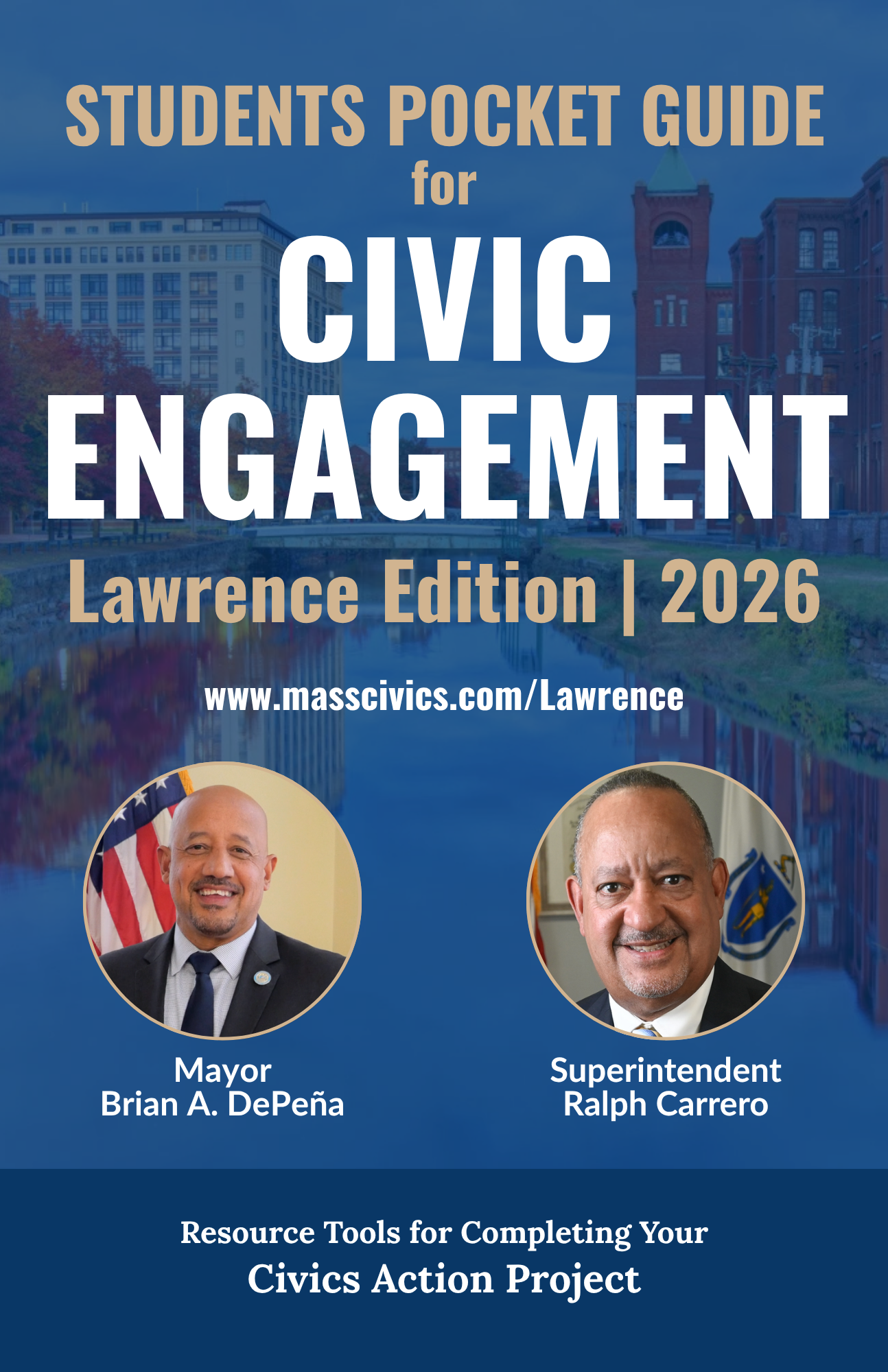
Lawrence, Massachusetts
A Short History of Lawrence
Lawrence did not just grow. Investors drew it on a map and built it on purpose, harnessed a river to run it, and then filled it with people from all over the world. Water, work, and waves of newcomers made this city, and they are still making it.
The River and Its First Peoples
Long before the mills, this land belonged to Indigenous people of the Pennacook and Pawtucket communities, who fished and lived along the Merrimack and its tributaries, the Spicket and the Shawsheen. Those three rivers shaped the seasons of life here for centuries, and they still fly over the city as the white trident on the Lawrence flag.
A Planned Mill City (1845-1853)
Lawrence is one of the few American cities built from scratch on purpose as an engine of industry. In 1845 a group of Boston investors formed the Essex Company, bought up farmland on the Merrimack, and set out to turn the river into power for textile mills. They raised the Great Stone Dam, finished in 1848 and one of the largest dams of its era, and laid out a brand new city around it. The community became a town in 1847 and a city in 1853, named for Abbott Lawrence, the industrialist who bankrolled the venture.
The Immigrant City & the Mills
Through the second half of the 1800s, giant textile mills lined the canals, among them the Pacific, the Pemberton, the Arlington, and the Wood. Workers poured in from Ireland, Germany, French Canada, Italy, Poland, the Middle East, and beyond, and Lawrence earned the name it still carries, the “Immigrant City.” It was dangerous work. In 1860 the Pemberton Mill collapsed and then caught fire, killing scores of workers in one of the worst industrial disasters of the age.
Bread and Roses, 1912
In January 1912, after the owners cut their pay, tens of thousands of Lawrence textile workers walked off the job. Many were immigrant women who spoke dozens of languages and organized across all of them, with help from the Industrial Workers of the World. The Bread and Roses strike drew the whole country’s attention and ended in a win for the workers. More than a century later it is still one of the most famous events in American labor history, and still a point of pride in Lawrence.
A Century of Change
The city kept producing people who mattered. Leonard Bernstein, the composer and conductor, was born in Lawrence in 1918. But through the middle of the 20th century the textile industry faded, and mill after mill closed or moved south. New arrivals filled the gap, first from Puerto Rico and then, in growing numbers, from the Dominican Republic, until Lawrence held one of the largest Dominican-American communities in the United States.
Lawrence Today
Today’s Lawrence is young, largely Latino, and at work rebuilding its downtown and its old mill districts along the river. The recent past has been hard in real ways. The state took the public schools into receivership in 2011, and in September 2018 a wave of natural gas explosions and fires tore through Lawrence and neighboring Andover and North Andover. Alongside those blows have come steady investment, immigrant-owned businesses, and some of the most determined community organizing in the state.
Learn More
Lawrence History Center
Archives and exhibits on the city’s industrial and immigrant past. lawrencehistory.org
Lawrence Heritage State Park
A visitor center in a restored mill boardinghouse telling the story of the mills and the workers.
Sources: City of Lawrence; Lawrence History Center; Massachusetts Department of Elementary and Secondary Education; published histories of the Lawrence mills and the 1912 textile strike.